
Building a solid investment portfolio doesn’t have to be complicated. In fact, one of the simplest and most effective approaches for those looking to grow their money without taking unnecessary risks is to combine growth stocks with defensive stocks.
This mix allows you to take advantage of opportunities when markets rise, without being fully exposed when things get bad.
In this article, I explain, in clear language and without technical jargon, what each type of stock is, what role it plays in your portfolio, and how to combine them intelligently to achieve long-term stability and growth.
1. What are growth stocks?
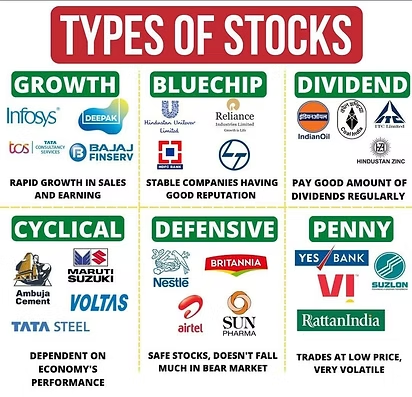
Growth stocks are companies that, as their name suggests, grow quickly : they increase sales, users, revenue, or new products at a faster rate than the market average.
Classic examples:
- Technology companies
- Innovative software companies
- Businesses in emerging industries, such as artificial intelligence or clean energy
Why do they attract investors?
Because they have the potential to multiply their value in the future . You invest today hoping that tomorrow they will be worth much more.
The problem?
They are more volatile. That is, their price rises sharply during periods of optimism… and falls sharply when the market becomes nervous. Their biggest risk is that investors “pay a high price” waiting for future results, and if those results are delayed, the stock price can fall.
In summary:
- Pros: High profit potential
- Cons: high risk, high volatility
2. What are defensive actions?
Defensive stocks are companies that sell products or services that people will continue to buy no matter what: food, medicine, utilities, basic necessities, etc.
Typical examples:
- Supermarkets
- Food producers
- Energy companies
- Healthcare and pharmaceutical companies
- Telecommunications
These are actions that don’t depend so much on the economy . Even in a crisis, people continue to buy food, use electricity, and need medicine.
Therefore, these stocks tend to be more stable.
The downside?
They grow less. They don’t usually multiply as quickly.
In summary:
- Pros: stable, defensive, less prone to decline in crises
- Cons: lower growth potential
3. Why combine them?
Herein lies the magic of a balanced portfolio.
A common mistake is choosing only growth stocks (too risky) or only defensive stocks (too conservative). But a well-designed portfolio seeks balance .
Combining growth and defense helps you to:
- Reducing volatility: when growth stocks fall, defensive stocks cushion the blow.
- Taking advantage of economic cycles: when the economy is doing well, your growth positions rise; when it’s doing poorly, your defensive positions protect you.
- Building stable long-term wealth: you grow without suffering so much in difficult times.
- Avoid emotional decisions: a balanced portfolio prevents you from panicking.
A smart portfolio doesn’t just bet on “future winners,” nor does it take too many precautions. It’s a flexible mix.
4. How do I know what percentage to use?

There is no magic formula here, but there are simple guidelines based on your risk tolerance.
Option 1: Conservative Profile
- 60% defensive actions
- 40% growth stocks
Ideal for:
- People who don’t want to see big falls
- Those who prioritize stability
- Those who invest for short or medium-term goals
Option 2: Balanced Profile
- 50% growth, 50% defensive
Ideal for:
- Those who want to grow their money without being reckless
- Those looking for a stable but profitable portfolio
Option 3: Aggressive Profile
- 65–75% growth
- 25–35% defensive
Ideal for:
- Investors with a horizon of 5 years or more
- People who are not worried about volatility
- Those seeking greater earning potential
The key is to choose the blend that allows you to sleep peacefully.
5. How to choose good growth stocks
You don’t need to be an expert. You can focus on simple things:
1. Companies that continue to grow year after year
More users, more sales, more market.
If a company is truly growing, its stock usually reflects that.
2. They should have a strong product that is difficult to replace.
Examples: giant social platforms, indispensable software, leading brands.
3. They should invest in innovation
Companies that invest in the future tend to remain competitive.
4. That they have clear advantages over their competitors
Technology, brand, costs, patents, user community.
You don’t have to guess who will be “the next big thing.” Just choose large, solid companies with a proven track record of growth.
6. How to choose defensive actions that actually protect
What’s important here is stability :
1. Companies with stable sales in crisis
Food, health, energy, basic services.
2. Companies with less debt
It helps maintain stability in tough times.
3. Products that people always need
They are not dependent on fashion or the economic cycle.
4. Constant dividends (optional)
Many defensive strategies pay dividends, which adds stability and cash flow.
7. Examples of simple combinations (illustrative only) to have a balanced portfolio
This is NOT financial advice. These are simply illustrative examples of what a diversified portfolio looks like.
Conservative portfolio
- Defensive: Walmart, Coca-Cola, Johnson & Johnson, NextEra Energy
- Growth: Nvidia, Meta, Tesla, Shopify
Balanced portfolio
- Defensive: Procter & Gamble, Costco, Pfizer
- Growth: Amazon, Alphabet, Netflix, AMD
Aggressive portfolio
- Defensive: PepsiCo, Verizon
- Growth: Snowflake, CrowdStrike, Palantir, MercadoLibre
The idea is not to copy, but to understand the structure.
8. How often should the portfolio be reviewed?
Once you’ve put together your initial mix, check:
Every 6 or 12 months
- Did your growth grow too much and now represent more than the percentage you wanted?
- Have your defensive muscles decreased and now weigh less?
- Has your mix stopped being what you initially defined it to be?
If so, rebalance.
That means selling some of what went up a lot and buying some of what fell below . It’s like “righting the scales”.
9. Common mistakes you should avoid
-
Wanting only trendy stocks? What’s “popular” usually comes at a premium. Don’t get carried away by the hype.
-
Not having defenses. Even the most aggressive portfolio needs its shield.
-
Review the market every day. The goal is long-term. Day-to-day emotions ruin decisions.
-
Buying shares without understanding what the company does. Invest in businesses you know or easily understand.
-
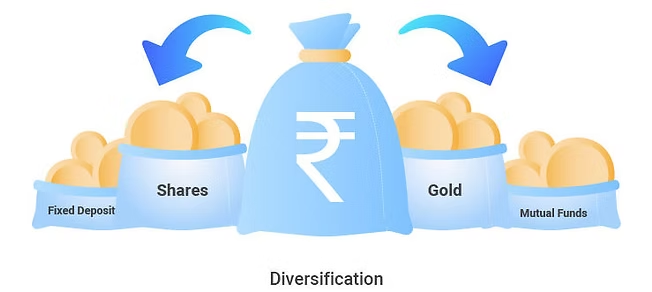
Don’t diversify within each group. Don’t put all your growth stocks into technology, or all your defensive stocks into healthcare.
10. Final conclusion
Building a balanced portfolio by combining growth stocks with defensive stocks is a simple yet powerful strategy for anyone who wants to invest long-term without becoming a finance expert.
Growth stocks give you the engine for growth. Defensive stocks give you stability in tough times. And the right mix helps you grow steadily without taking unnecessary risks.
You don’t need to choose perfect stocks or predict the future. You just need to find a balance that suits your personality, your risk tolerance, and your goals.
If you do it with discipline and patience, your portfolio can become a solid tool for building wealth in a calm and sustainable way.